





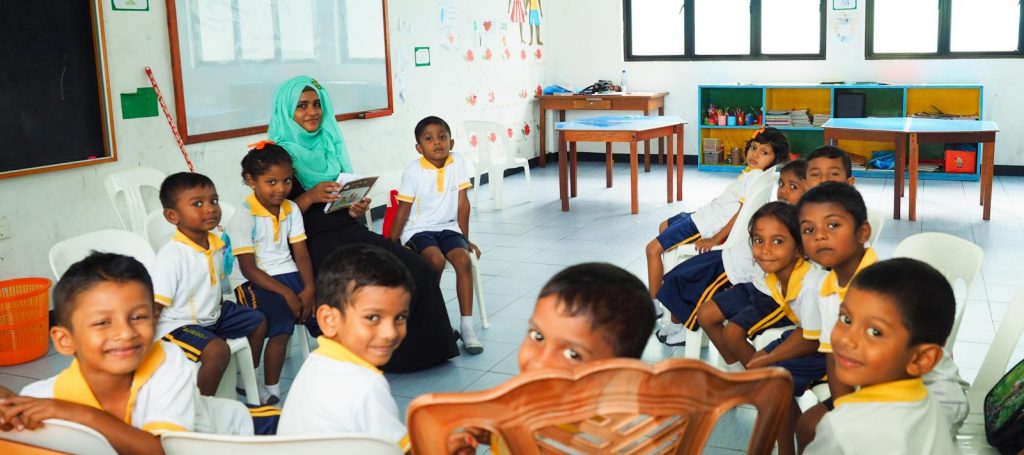
The United Nations Children’s Fund (UNICEF) has revealed that every three out of 20 children in the Maldives are stunted.
One out of 10 Maldivian children under the age of five is underweight relative to their height, according to the international child rights organization. There is also an increase in obesity, which increases the risk of non-communicable diseases (NCDs). Furthermore, Maldivian children have a high anemia rate, with half of the underage population having low iron levels.
The trends in the Maldives reflect the results of the report released by UNICEF to celebrate World Food Day 2019 on child malnutrition.
Considered as yet the most extensive assessment of all types of child malnutrition published in the 21st century, ‘ The State of the World’s Children 2019: Children, Food and Nutrition ‘ states that at least one out of three children under five is either undernourished or overweight.
149 million children around the world are stunted, or too short for their age, while 50 million children are too thin for their height. A total of 340 million children suffer from vitamin and nutrient shortages and overweight or obese are 40 million children.
UNICEF’s report provides an overview of child malnutrition, explaining poor nutrition’s early beginnings. While only 49% of infants have been breastfed exclusively for the first six months, most children are not introduced in the initial stages to appropriate food. Nearly 45% of children between the ages of six months and two are not fed fruit or vegetables, which increases the risk of poor brain development, weak learning, low immunity, increased infections or death.
Children are exposed to unhealthy food as they develop as a result of excessive marketing and advertising, the proliferation of ultra-processed foods in both cities and remote areas, and increased access to fast food and heavily sweetened beverages, according to the study.
The report also noted that children and adolescents living in the world’s poorest and most marginalized communities face the largest burden of malnutrition. UNICEF also emphasized that severe food shortages are triggered by climate-related disasters such as drought.
“Despite all the technological, cultural and social advances of the last few decades, we have lost sight of this most basic fact: If children eat poorly, they live poorly”, stated UNICEF Executive Director Henrietta Fore.
“Millions of children subsist on an unhealthy diet because they simply do not have a better choice. The way we understand and respond to malnutrition needs to change: It is not just about getting children enough to eat; it is above all about getting them the right food to eat. That is our common challenge today”.
UNICEF encouraged states, sponsors, children, families, companies and the private sector to address this issue through the introduction of the following policies.
– Empowering families, children and young people to demand nutritious food by improving nutrition education and using legislation such as sugar taxes to reduce the demand for unhealthy foods.
– Incentivizing food suppliers to provide healthy, convenient and affordable foods.
– Building healthy food environments for adolescents by using reputed policies including the introduction of accurate and easy-to-understand labeling and imposing stronger controls on promoting unhealthy foods.
– Mobilizing systems including health, water and sanitation, education and social protection to increase the impact of nutritional policies.
– Collecting, analyzing and utilizing high-quality data and evidence to support action and monitor progress.
“We are losing ground in the fight for healthy diets”, said Fore.
“This is not a battle we can win on our own. We need governments, the private sector and civil society to prioritize child nutrition and work together to address the causes of unhealthy eating in all its forms”.
0 comments